Why are more and more people worldwide choosing copper again?
Copper is making a comeback. Discover why this centuries-old tradition is catching on again worldwide in a world full of plastic.
Written and source-checked by the Kopero editors · Updated August 20, 2026

There was a time when copper was everywhere around you: in water pipes, in cookware, in the cups people drank from every day. At some point in the twentieth century, it gradually gave way to cheaper, easier-to-produce alternatives, plastic above all. But in recent years you can see a striking movement going the other way: more and more people, all over the world, are deliberately choosing copper again.
In short
- Sustainability: copper is infinitely reusable, at a time when the EU and more and more consumers are actively cutting back on disposable plastic.
- Material experience: copper has weight, patina and history, as opposed to anonymous plastic.
- Mindful living: from water bottles to tongue scrapers, copper pops up everywhere within the mindful, natural-living movement on social media.
- International habits: in Nepal and India, drinking from copper has been normal for generations, while in the West it feels like a rediscovery.
- EMF shielding: thanks to the Faraday-cage effect, the biohacking world uses copper mesh to shield against electromagnetic radiation.
- Tradition: copper has been around since humans learned to work metal, and it's still very much alive.
- Circularity: two thirds of all the copper mined since 1900 is still in use, and thirty percent of world demand is met by recycling.
The rise of mindful, natural living
Everywhere, people are looking more critically at what they use every day: less plastic, more natural materials, more attention to where things come from and how long they last. A whole movement around self-care and natural rituals is growing on social media, and copper keeps showing up in it, from water bottles to bracelets to the morning ritual with a tongue scraper.
That distrust of plastic isn't just a feeling. In 2021, the European Union introduced a ban on a range of single-use plastics, from straws to cotton buds, specifically to reduce dependence on single-use plastic. More and more consumers are already anticipating that by switching to reusable alternatives themselves, and a metal that lasts practically forever and is fully recyclable fits well with that. Copper doesn't corrode like iron and doesn't weather away like plastic: a copper object you buy today can, in principle, last for decades before it ever needs replacing.
There are hard numbers behind that reusability. Roughly two thirds of all the copper taken out of the ground since 1900 is still in use today, and about thirty percent of world demand is met with recycled copper. In Europe that share is closer to half. Copper loses none of its properties when it is melted down, so the copper in your bottle may literally be older than the bottle.
What's also striking is how international that feeling is. In countries like Nepal and India, drinking from a copper cup has been a completely ordinary daily habit for generations, never having gone away. In the West, that same habit now feels like a rediscovery.
The EMF angle: copper in the biohacking world
A lesser-known but growing reason for the renewed interest in copper comes from a completely different angle: the biohacking and "healthy home" movement. There, it's not about drinking from copper, but about shielding against electromagnetic radiation, or EMF, with copper mesh or copper sheeting.
The underlying principle is ordinary electrical engineering: copper is an excellent conductor and can therefore, just like in a classic Faraday cage, reflect and intercept electromagnetic waves before they enter a space. Fine copper mesh achieves around 60 decibels of attenuation across the range from 10 megahertz to 1 gigahertz, where wifi, phone and radio sit. That works out at 99.9 percent of the signal. Hospitals use the same physics: an MRI room is lined with copper sheet as standard to keep outside radio waves out. How people then apply that principle in and around their home is a biohacker practice.
Well-known biohackers and podcasters, including Ben Greenfield, discuss on their podcasts how they try to make their homes low-EMF, including with copper mesh under roof tiles or in floors and walls: a personal lifestyle choice within that community. It shows that copper shows up just as much in the modern, tech-driven biohacking world as in centuries-old traditions.
The metal of Venus: Cyprus, Aphrodite and connection
Copper's appeal is older than today's movement around natural living. Even the name carries an island within it: the Latin aes cyprium, the metal of Cyprus, eventually became our word copper via cuprum. The Royal Society of Chemistry still preserves that origin in its description of the element. In antiquity, Cyprus was an important centre of copper mining and the island of Aphrodite. In Cypriot religious tradition, she became not only the goddess of love, beauty and fertility, but also protector of copper.
That thread lived on in the Western esoteric tradition. In the sixteenth century, Heinrich Cornelius Agrippa linked copper to Venus: the planet and archetypal force of attraction, harmony, creativity and connection. Because of that, copper has never been just a practical, conductive metal within ritual and energy work. It's also a warm, living material through which people give shape to beauty, contact and intention. That's exactly where a copper object differs from something anonymous: it gets used, touched, and gradually develops a shine of its own.
Why copper fits this moment
Part of the appeal is very practical. Copper is a natural, infinitely reusable metal at a time when people are becoming increasingly mindful of disposable items. Another part is more tangible: copper feels like something with weight and history, in a world full of light, anonymous plastic. A copper object also changes along with whoever uses it. It develops its own patina, its own shine, something no two users will ever end up with exactly the same.
You can see how far that goes on the most famous copper object in the world. The Statue of Liberty wears a copper skin of 31 tonnes, nowhere thicker than 2.4 millimetres, about the thickness of two coins. It has stood in sea air since 1886, and the green patina it grew in its first decades is less than 0.13 millimetres thick. That layer protects the copper underneath instead of eating into it. The same thing happens on a small scale to your bottle or your mug.
And maybe there's simply something reassuring about a tradition that's lasted this long. Copper has been around since humans first learned to work metal: thousands of years ago, and still very much alive today.
Back to something that always worked
People worldwide are choosing copper again because it offers something plastic could never offer: a story, a ritual, a material that grows alongside you instead of being thrown away. And in a world full of disposable items, that's exactly why more and more people are turning back to what worked, long before plastic ever existed.
Want to know more about the history and science behind this rediscovery? Also read 3500 years of copper as medicine: from the Edwin Smith Papyrus to now, The French doctor who accidentally discovered that copper kept cholera away, and Can copper really kill bacteria? The evidence, from the EPA to Southampton.
To see what copper does over the long run, read Copper objects that outlived the centuries: four pieces that are still here centuries later.
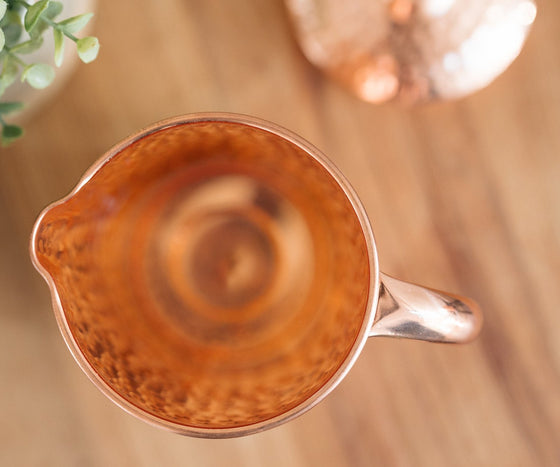
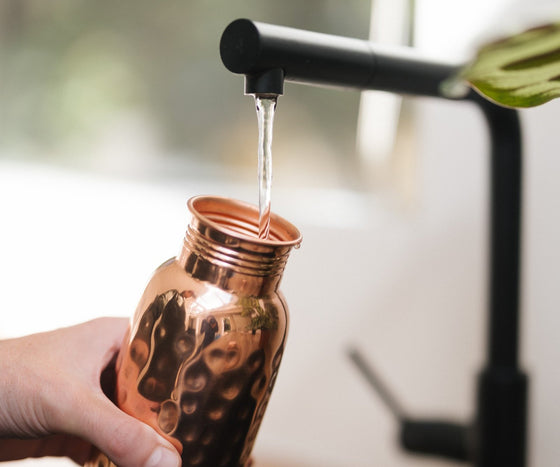
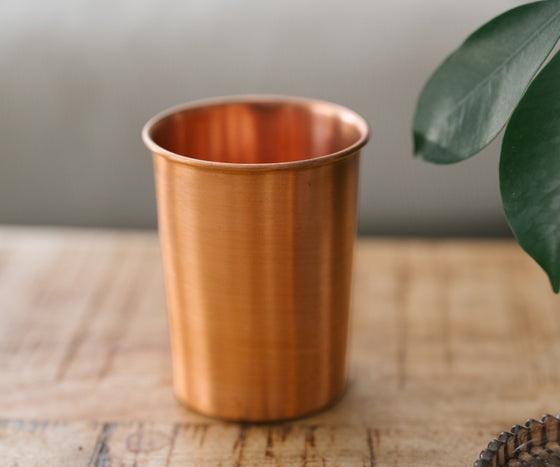
Want to experience that renewed popularity for yourself? Kopero has a copper product for every use: the water bottle and mug for on the go, the bracelet and tensor ring for everyday use, the copper pyramid for the home, the electroculture garden stakes for the garden, and the tongue scraper for your morning ritual. Browse the full collection and discover for yourself why copper is winning ground again worldwide.