What does research say about copper? The studies per product
From EPA registration and a hospital study to pyramid research and electroculture across 3,600 hectares: the research behind every Kopero product, with sources.

Anyone who sells copper should be able to show where the stories come from. On this page, we gather the research we find most convincing for each product: sometimes hard laboratory work, sometimes a government programme, sometimes a centuries-old tradition now getting company from measurements. We always say what kind it is, so you can weigh it yourself.
In short
- Copper surfaces have been registered as an antimicrobial material by the US EPA since 2008; a randomised hospital study found 58% fewer healthcare-associated infections.
- Contaminated water in copper vessels was completely free of bacteria after sixteen hours in a peer-reviewed study, and the pH rose measurably.
- In clinical research, a tongue scraper removed 75% of sulphur compounds, a toothbrush 45%.
- In the oldest clinical study, copper bracelets released an average of 13 milligrams of copper per month to the skin.
- Peer-reviewed animal studies found lower stress hormones under a pyramid model than in a cube of equal size.
- Electroculture runs across more than 3,600 hectares of greenhouses in China, with 20 to 30% higher yields.
Drinkware: bottle, mug, cup and jug
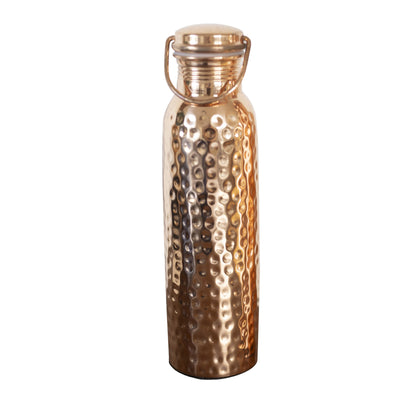
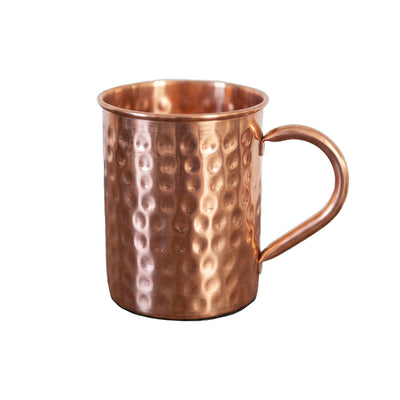
This is where the evidence is strongest. The US EPA officially registered copper alloys as an antimicrobial surface material in 2008, after tests in which cleaned copper killed more than 99.9% of bacteria such as MRSA and E. coli within two hours. The University of Southampton saw norovirus inactivated within minutes. And in a randomised study across three American intensive care units, healthcare-associated infections were 58% lower in rooms with copper surfaces (Salgado et al., 2013).
For drinking water itself, there's the study by Sudha and colleagues (2012): experimentally contaminated water was completely free of bacteria after sixteen hours in a copper vessel, and the pH rose from 7.83 to 7.93, exactly the mild alkalinisation the Ayurvedic tamra jal tradition has been describing for centuries. Our own bottle, mug, cup and jug have also been independently tested: 99.21% copper, passed the EU food safety tests, and none of the nineteen heavy metals tested for were detected. The full story is in Can copper really kill bacteria?
Tongue scraper
The Charaka Samhita already prescribed tongue cleaning, and modern dentistry has measured it. In a clinical comparison in the Journal of Periodontology (2004), a tongue scraper removed 75% of the sulphur compounds that cause bad breath; a toothbrush managed only 45%. A Cochrane review confirms the benefit. That's how simply an centuries-old morning ritual can prove itself.
Bracelet
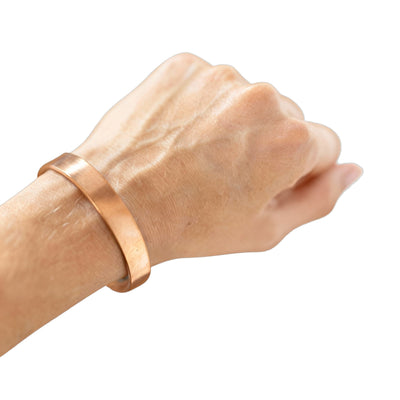
That a copper bracelet does more than just look good has been measured more often than you'd think. In the oldest clinical study (Walker and Keats, 1976), bracelets released an average of 13 milligrams of copper per month to the skin, and a significant share of wearers reported benefiting. Dermatologists Hostynek and Maibach later showed that metallic copper penetrates the upper skin layer. And in a double-blind study with pillowcases containing copper oxide, skin improved measurably; copper dressings sped up healing in wound care. Copper is also an essential mineral, involved in energy metabolism and cell protection. Read more in The copper bracelet: a centuries-old tradition, or check out the bracelet itself.
Pyramid
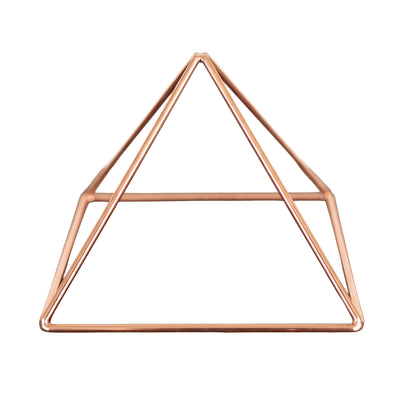
The most surprising research comes from India. A medical research group at Manipal University published peer-reviewed animal studies in which rats under a pyramid model had lower cortisol levels and less oxidative stress than animals in a cube of the same dimensions; the shape did the work, not the enclosure. A follow-up study linked the effect to north-south alignment, and earlier work found faster wound healing. In addition, Russian researchers reported 30 to 100% higher seed germination in Golod's pyramids, and the bean experiment by Rubik and Jabs found 19% more biomass under a pyramid. The full history is in Pyramid energy; the smooth and twisted Kopero pyramid follow exactly the geometry this tradition revolves around.
Tensor ring
The tensor ring rests on the idea that you can change water without adding anything to it. That idea stands less alone than it once did: in agricultural science, peer-reviewed studies showed seeds germinating 13 to more than 40% faster in magnetically treated irrigation water, with 20 to 25% higher yields in several trials, and at the University of Washington, professor Gerald Pollack is researching how water forms an ordered phase along surfaces. That copper measurably changes water has been directly measured (Sudha's pH increase above). The tensor ring works within its own tradition using geometry; you can read the story behind that tradition in Tensor rings: who was Slim Spurling?
Electroculture
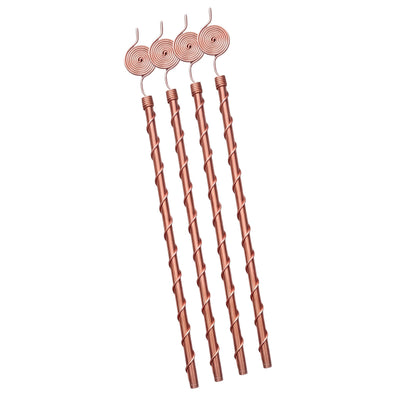
Three lines of evidence make electroculture more than a TikTok trend. Between 1918 and 1936, the British Ministry of Agriculture reported yield increases of 30 to 50% in its own field trials. In China, a government-funded programme runs across a combined total of more than 3,600 hectares of greenhouses, with 20 to 30% higher yields and 70 to 100% less pesticide use. And in 2022, Nature Food published a study in which peas under an electric field germinated 26.3% faster and yielded 17.9% more. The Kopero antennas work passively, in the border or simply indoors in a pot; the full history is in Electroculture: a centuries-old gardening tradition rediscovered.
How we handle research
For every finding, we name the source and the kind of evidence, from a randomised hospital study to tradition. Laboratory results are no guarantee for your own kitchen table, and energetic traditions aren't medicine; we simply say so alongside them. What remains is exactly why we work with copper: a material where centuries of use and a growing stack of measurements point in the same direction.
Want to experience it for yourself? Browse the full Kopero collection.