Torsion fields and 'The Source Field': the story behind Kozyrev and Wilcock
Who was Nikolai Kozyrev and what does David Wilcock claim about torsion fields and the Source Field? The full story.

Some ideas are born in well-funded laboratories. This one was born in a gulag. The story of torsion fields begins with a Soviet astrophysicist who kept thinking about the nature of time itself under the harshest of conditions, and ends almost a century later on the New York Times bestseller list.
In short
- Nikolai Kozyrev (1908-1983) developed his torsion theory partly during his time in a Soviet gulag.
- According to Kozyrev, time isn't a neutral backdrop, but itself a form of energy that interacts with matter and consciousness.
- Researchers Kaznacheyev and Trofimov built the spiral-shaped "Kozyrev mirrors" in the 1980s and 1990s, directly inspired by his theory.
- David Wilcock brought these ideas to a wide audience in 2011 with "The Source Field Investigations" (No. 18 on the New York Times bestseller list).
- In his book, Wilcock explicitly connects torsion fields to the pyramid effects of Alexander Golod.
- Copper, as the second-best conducting metal in the world, keeps returning in both traditions as the preferred material.
Nikolai Kozyrev: time as energy
Nikolai Kozyrev (1908-1983) was a respected Soviet astrophysicist before he was imprisoned. During the years he spent in a gulag, he kept thinking and working on his ideas about the universe. There he developed a theory that would later carry his name: that time isn't a neutral backdrop in which things happen, but itself a form of energy that interacts with matter and with consciousness. He called this phenomenon torsion.
The spiral-shaped mirrors
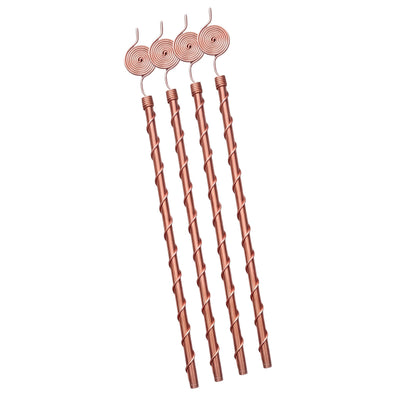
His ideas didn't die with him. In the 1980s and 1990s, researchers such as Kaznacheyev and Trofimov built on his theories and constructed the spiral-shaped structures now known as Kozyrev mirrors. These mirrors are directly inspired by Kozyrev's ideas about torsion and the interaction between time, matter and consciousness.
David Wilcock and the Source Field
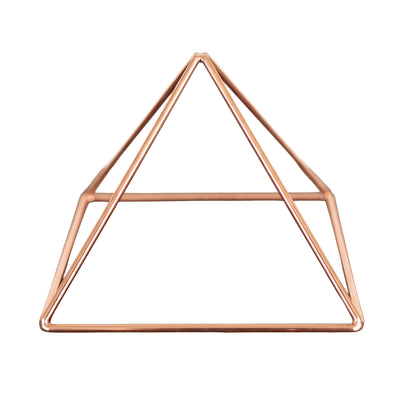
Jump to 2011, and we arrive at a very different kind of author: David Wilcock. That year, Wilcock published "The Source Field Investigations", a book that reached No. 18 on the New York Times bestseller list. In it, he describes a "Source Field", a source of energy which, according to him, underlies space, time, matter and consciousness all at once. In his book, Wilcock explicitly connects pyramid effects, such as those attributed to structures like Alexander Golod's Russian pyramids, to the torsion fields that trace back to Kozyrev's work.
The common thread: copper as conductor
What keeps connecting these stories, from Kozyrev's torsion to Golod's pyramids, is the role of conductive materials. Copper sits at the top of that list: the second-best conducting metal that exists, after silver. That property is exactly why copper keeps appearing in so many of the structures and objects used throughout this whole field.
Water, information and your own experience
Within thinking about torsion fields and the Source Field, water is often seen as a sensitive medium: not just a collection of molecules, but a dynamic network that responds to its surroundings. Outside this tradition too, water structure is studied extensively; hydrogen bonds are constantly forming and breaking, and different measurement methods reveal different layers of that behaviour. A broad overview of water structure and applications shows just how much lies behind an everyday glass of water.
If you want to explore the experiential part yourself, turn it into a blind test. Fill two identical glasses from the same tap. Have someone else place one glass near a tensor ring or inside a copper geometric shape, then mark both glasses only with A and B afterward. Taste them at the same temperature, without knowing which glass is which, and note mouthfeel, softness and taste. Repeat it over several days. Within energy work, personal perception isn't a footnote, but a way to genuinely meet an idea.
Further reading
This story doesn't stand alone. Also read about pyramid energy, from a French trader to Russian fibre-optic giants, the structure Wilcock himself refers to, and about tensor rings and Slim Spurling, another copper shape from the same belief system.
Curious about the shape Wilcock himself refers to when talking about pyramid effects? Check out Kopero's copper pyramid energiser, in smooth or twisted versions, or the tensor ring. Browse the full collection for more copper objects from this tradition.