Copper deficiency: how common is it really (and when should you pay attention)
Copper deficiency sounds scary, but with a normal diet it's rare. We explain how much copper you need and when it's worth paying attention.

The short answer: very rarely
Do you ever worry whether you're getting enough copper? Chances are you're perfectly fine. With a normal, varied diet, copper deficiency is rare, and that's exactly the kind of reassuring fact that gets lost in all the copper hype.
In short
- With a normal, varied diet, copper deficiency is rare
- The recommended daily allowance (RDA) is around 900 micrograms per day, with a safe upper limit of about 5 mg per day
- Still, more than 25% of adults in North America fall short of the recommended intake (EAR)
- A deficiency mainly occurs after certain stomach surgeries or with prolonged high zinc intake
- Zinc and copper compete in the gut for the same absorption route
- Copper drinkware is an effortless, everyday addition, with no need for a supplement or extra step
How much copper do you actually need?
For adults, the recommended daily allowance (RDA) is around 900 micrograms per day, a fraction of a gram. Average intake in Western countries is usually already well above that, simply because copper is found in so many everyday foods: wholegrain cereal products, nuts, seeds, legumes, potatoes, shellfish, and even dark chocolate. Anyone who regularly eats that kind of food naturally hits the RDA in practice, without ever consciously paying attention to it. The safe upper limit is around 5 mg per day, far above what you get from a normal diet.
Still, "on average more than enough" isn't the same as "enough for everyone". International estimates (EAR) show that more than 25% of adults in North America fall short of the recommended copper intake. That doesn't mean a quarter of people actually develop symptoms, most of them notice little of it in practice, but it does show that the assumption "I'll get that from a normal diet anyway" doesn't hold equally true for everyone.
So when does a deficiency occur?
When copper deficiency does occur, it's usually not in people who simply eat a varied diet. It's mainly seen in specific situations: after certain types of stomach surgery, with long-term overdosing of zinc supplements, or with conditions that make it harder to absorb nutrients. Those are clearly defined, medical situations, not a scenario the average coffee drinker needs to worry about in the morning. But they're not theoretical exceptions either: after stomach surgery such as a gastric bypass, absorption of several minerals, copper included, is demonstrably disrupted, and that's a group that can genuinely end up with a deficiency in practice.
That zinc issue is worth mentioning, because zinc and copper compete in the gut for the same absorption route. If you take high doses of zinc supplements for a long period, for example against colds or acne, that can suppress copper absorption over time. At the doses found in ordinary multivitamins, this barely plays a role. It only becomes relevant with high, long-term zinc doses, something your GP or pharmacist would already warn you about anyway.
Signs to keep an eye on
With an actual deficiency, the medical literature describes signs including: anaemia, lighter pigmentation of skin or hair, reduced resistance and, in more pronounced cases, issues with connective tissue or the nervous system. That fits logically with the functions copper has in your body, since it plays a role in exactly those processes, from your immune system to the pigmentation of skin and hair. Most of this evidence comes from research into people with a demonstrable medical problem, such as after stomach surgery, and not from research into mild, everyday fluctuations in copper intake.
These signs don't automatically say anything about your copper status on their own, by the way. They can have dozens of other causes, from lack of sleep to a thyroid problem to simply a busy period. If in doubt, a conversation with your GP, possibly with blood tests, is the only way to know for sure.
Why this is reassuring news for most people
In a nice way, copper is one of the least worrying nutrients: it's abundant in ordinary, everyday food, your body needs relatively little of it, and a deficiency usually requires a fairly specific cause. That means you can mostly just enjoy everything copper does for you, from its contribution to your energy metabolism to your connective tissue, without having to worry about it daily. If you do fall into one of the groups above, after stomach surgery or with prolonged high zinc intake, it is worth pausing to consider it.
Why this happens to fit well with Kopero
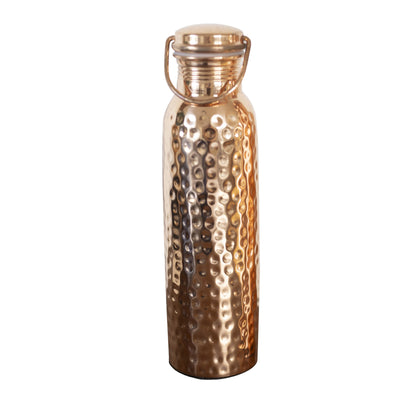
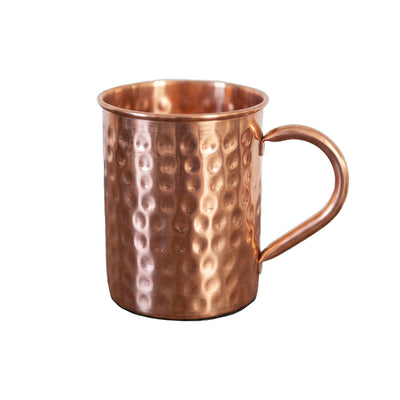
For people who fall into one of these groups, or who simply don't want their copper intake left to chance, copper drinkware is a pleasant, low-effort addition. You don't have to do anything extra for it: no supplement, no new habit, you just use the cup you'd reach for every day anyway. For someone who's just had stomach surgery or uses zinc long-term, that's exactly the kind of habit that fits "a little extra in the background", alongside, not instead of, a doctor's or dietitian's advice.
Our view on copper, in miniature
We love copper for what it is: beautiful, timeless and with a long history in human nutrition and culture. Our copper jug, cup and water bottle are no substitute for a varied diet or medical advice, but they are a daily, low-effort reminder of a metal your body already works with, every single day.
Check out our Kopero premium copper jug, Kopero premium copper cup and Kopero premium copper water bottle, or discover the full range.