Maintaining a copper bottle: cleaning, polishing and storage
Keep your copper bottle looking good for years: the lemon-and-salt method, what to avoid, and how to store it best.

A bottle that lasts a lifetime with a little attention
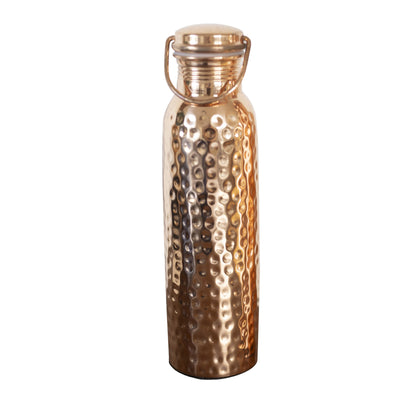
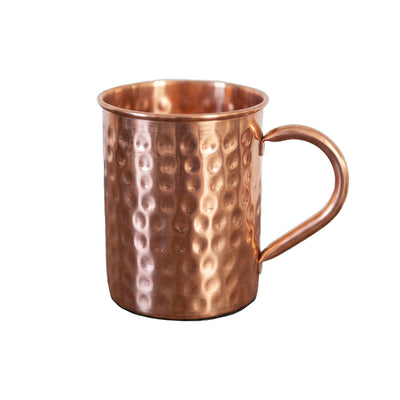
Copper is one of the few materials that can look even better after years of use than on the day you bought it. That just doesn't happen on its own without checking in on it now and then. The good news: maintenance takes a few minutes and supplies already in your kitchen cupboard. And everything below applies not just to your bottle, but just as much to your mug, cup, jug and bracelet: it's all the same solid copper, so the same approach works everywhere.
The lemon-and-salt method
This is by far the best-known way to make copper shine again, and it works because it directly targets the chemistry of patina. The acid in the lemon dissolves the surface oxide layer, while the salt acts as a gentle abrasive to mechanically loosen that layer.
In short: the lemon-and-salt method
- Cut a lemon in half and sprinkle the cut side with a generous layer of coarse salt.
- Rub it over the copper surface in circles, applying a bit more pressure to the most discoloured spots.
- Let it sit for a minute or two.
- Rinse thoroughly with lukewarm water.
- Dry immediately and completely with a soft cloth.
- No lemon at home? Vinegar with salt works just as well.
Lemon
Cut a lemon in half.
Salt
Sprinkle the cut side with coarse salt.
Polish
Rub the copper in circles, then rinse and dry.
For light, everyday shine, a soft, dry polishing cloth is often already enough. Save the lemon-and-salt treatment for when the discolouration really stands out.
What's better left alone
The dishwasher is the biggest culprit: the combination of aggressive dishwasher tablets, high temperatures and prolonged exposure to moisture is disastrous for copper, so always wash your copper products by hand. Scouring pads and steel wool are also best avoided, since they scratch the surface, and dirt and discolouration then settle more easily into those scratches. Also don't leave any liquids other than water sitting for hours in a bottle, mug, cup or jug: fruit juice or sports drinks speed up the metal's reaction because of the acids and sugars they contain.
How to store it best
Dry is the key word. Never leave a bottle, mug, cup or jug wet in a closed bag or cupboard after washing, because trapped moisture actually speeds up the very discolouration you just polished away. Let it drain upside down after use before putting the lid on, store it in a well-ventilated spot, and don't leave it filled for weeks on end if you're not using it.
Maintaining your bracelet: slightly different
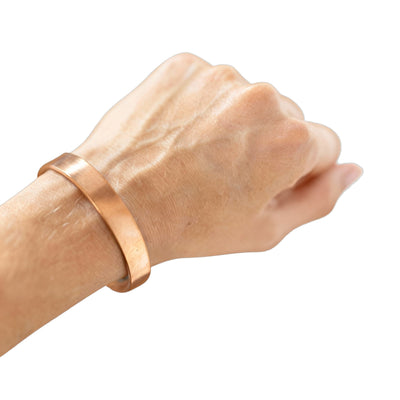
You live with a bracelet differently than with a bottle: it comes into contact all day with sweat, hand cream, perfume and sometimes chlorinated pool water. All those substances can make the patina appear a bit faster or more unevenly. So it's best to take your bracelet off before applying cream or perfume and before swimming, and dry it thoroughly whenever it gets wet.
Otherwise, exactly the same lemon-and-salt method works as for your bottle, mug, cup or jug: rub, rinse, dry, done. If you'd rather let the natural discolouration appear on your wrist, just let the bracelet do its thing. That's also pure copper doing what it's always done.
Discolouring again anyway? That's part of it
Even with perfect maintenance, copper builds up a bit of patina again over time. That's simply what copper does. Don't think of the lemon-and-salt method as an emergency measure, but as something you do now and then because it's satisfying to see your product shine again.
With just a few minutes of maintenance a week, your copper products will easily last for years. Check out the mug, cup, jug and bracelet, or browse Kopero's whole range.