3500 years of copper as medicine: from the Edwin Smith Papyrus to now
From ancient Egypt to the Roman Empire and Ayurveda: copper has played a role in medicine for 3500 years. A timeline through history.

Few materials have humanity kept returning to for more than three and a half thousand years to help heal itself. Copper is one of them. From the banks of the Nile to the operating rooms of Pompeii, from the writings of Hippocrates to the classical texts of Ayurveda, the same red metal keeps appearing throughout the history of medicine. This is that history, in order, from Egypt to China and from Rome to the American Great Lakes.
In short
- The Edwin Smith Papyrus (around 1600 BC) is the oldest surviving medical text with a copper recipe, for a non-healing chest wound.
- The Hippocratic Collection (5th-4th century BC) describes copper oxide and copper sulphate against wound infections.
- In Pompeii, a set of forty bronze surgical instruments was found, now on display in Naples.
- In Ayurveda (Sushruta Samhita), the tradition of Tamra Jal exists: drinking water in the morning that has spent a night in copper.
- In Chinese medicine, copper is linked to the Metal element and the lungs; copper coins were boiled or used as a scraping tool.
- The Old Copper Culture around the Great Lakes, starting around 7500 BC, is one of the oldest metalworking traditions in the world.
Egypt: the oldest medical handbook we know
It begins with one of the most remarkable documents of antiquity: the Edwin Smith Papyrus. The surviving text dates from around 1600 BC, written in hieratic script, and is regarded by historians as a copy of a considerably older work. That makes it one of the oldest medical texts humanity possesses: more than 3500 years old.
One of the treatments it describes, for a non-healing chest wound, involves a copper-sodium salt solution, followed by a willow-leaf extract and a herbal poultice. In 1975, medical historian Guido Majno reconstructed this kind of Egyptian copper recipe in the laboratory and showed that the powder of malachite and chrysocolla, both copper-bearing minerals, genuinely worked as an antibacterial agent. The ancient Egyptians didn't know what a bacterium was. They did know that copper helped.
Greece: copper in the Hippocratic Collection
A thousand years later, in the Greece of the fifth and fourth centuries BC, copper appears again, this time in the writings attributed to Hippocrates, the man still regarded as the founder of Western medicine. The Hippocratic Collection describes copper for treating leg ulcers caused by varicose veins, dry powdered copper oxide and copper sulphate applied to fresh wounds against infection, and a boiled mixture of honey and red copper oxide as an antiseptic wound remedy.
How familiar the Greeks were with this metal is reflected in the language itself: the Latin cuprum, the origin of our word "copper", comes from Kypros, present-day Cyprus, where the Greeks obtained their copper.
Rome: surgeons with copper instruments
The Romans picked up the baton. Celsus, who wrote his standard medical work De Medicina at the start of the first century AD, mentions copper for treating venereal diseases and chronic ulcers. The finest evidence came out of the ground centuries later, in Pompeii.
In the so-called "House of the Surgeon", archaeologists found a set of around forty bronze instruments (bronze being a copper alloy) clearly used for surgery. That set is now held at the Museo Archeologico Nazionale di Napoli, and shows how naturally Roman physicians reached for copper alloys when it mattered.
India: the Ayurvedic tradition runs in parallel
While physicians in the Mediterranean were applying copper to wounds, a separate tradition around the same metal developed in India. The Sushruta Samhita, one of the foundational texts of Ayurveda, describes copper as one of the materials in which you store and drink your water in the morning: a habit known as Tamra Jal, still continued in Indian households to this day.
China: copper in traditional Chinese medicine
Copper also found a fixed place in medicine in ancient China, via a very different route than in Egypt or Greece. Within the Chinese five-elements theory, as laid down in the Huang Di Nei Jing (the Yellow Emperor's Inner Classic, compiled during the Han dynasty), the Metal element is linked to the lungs and large intestine, to autumn and to breathing. Metal objects, copper foremost among them, were given a place within that system in the treatment of complaints associated with that element.
Since the early Chinese Bronze Age, the Shang dynasty from around 1600 BC, copper, often worked into bronze, was considered a precious and powerful material. In later dynasties, from the Han to the Qing, round copper "cash coins" with a square hole in the middle were used medicinally in two ways: boiled in water to make a drink, or used as a scraping tool with which a physician would run along the meridians over the skin to release stuck energy. Those same coins, with their recognisable shape, are still mentioned to this day in the history of Chinese medicine.
North America: copper as a ceremonial and medicinal material
Around the Great Lakes, in what is now the northern United States and southern Canada, indigenous peoples developed their own copperworking tradition from around 7500 BC: the so-called Old Copper Culture, one of the oldest metalworking traditions archaeologists have found anywhere in the world. Initially, the pure copper, which in the region literally lay at the surface, was cold- and hot-hammered into arrowheads, knives, fishhooks and awls.
Later, particularly during the Hopewell period (roughly from the start of our era to 400 AD), use shifted from purely practical to ceremonial. Copper breastplates, effigies and jewellery were given a place in funerals, weddings and rituals, and were seen as carriers of spiritual meaning and status. At the potlatch, the ceremonial feast of peoples of the northwest coast, worked copper was even deliberately destroyed or given away as a demonstration of a chief's wealth and status. Through extensive trade networks, Great Lakes copper reached areas as far as the Great Plains and the Gulf Coast.
Europe: copper in folk medicine
Alongside the official medical writings of the Greeks and Romans, Europe was also home for centuries to a less documented, orally passed-down layer of folk medicine around copper: folk beliefs that show how deeply trust in this metal was rooted in daily life.
- Placing a copper coin in the water bucket or water jug, to keep the water "sweet" and safe for use.
- A copper penny in the bathwater, as part of cleansing rituals.
- Placing a piece of copper on a bruise, for the cooling sensation it gave.
Such habits arose independently of one another, from Chinese coin decoctions to European water buckets: for centuries, people saw something in this metal, long before anyone could explain why.
Cyprus, Aphrodite and the metal of Venus
Alongside medicine, a second copper thread ran through antiquity: that of ritual, beauty and divine connection. Cyprus was one of the great copper centres of the Mediterranean world. The Roman expression aes cyprium, metal of Cyprus, eventually became cuprum: the name the Royal Society of Chemistry still cites as the origin of the element.
The same island was regarded as the domain of Aphrodite. A Cypriot heritage study describes her not only as goddess of Cyprus, but also as protector of copper mining. In the later Western esoteric tradition, copper became the metal of Venus; that link appears, among other places, in Agrippa's sixteenth-century work. In this way copper became associated with love, harmony, attraction, fertility and creativity, living on not only in instruments and remedies, but also in amulets, mirrors, jewellery and rituals.
What this history tells us
Egypt, Greece, Rome, India, China, North America and European folk belief: civilisations and traditions, each thousands of kilometres apart, that independently arrived at a similar conclusion about the same metal without direct contact. A pattern like that, repeating across almost four thousand years and five continents, is hard to dismiss as coincidence.
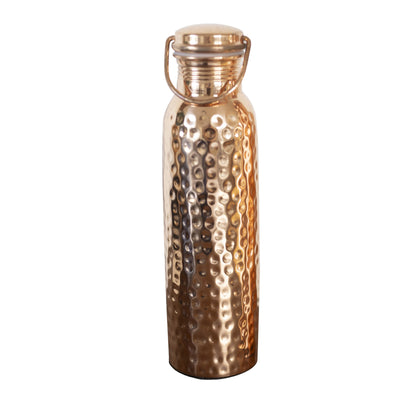
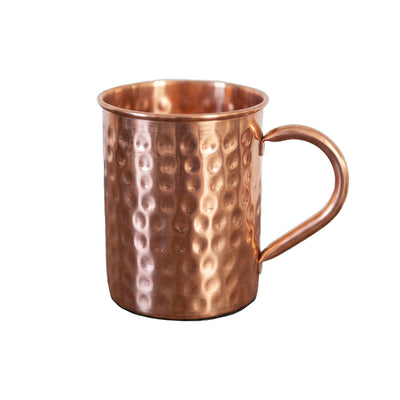
Want to become part of that long line yourself? Discover the copper water bottle, the copper jug, the copper mug and the copper cup from Kopero, or browse the full collection of copper products from that centuries-old tradition.